
From Emergency to Structure
By 1934, the chaos of the early Depression years had given way to something more structured. While economic hardship persisted—unemployment remained above 20%, and thousands of banks were still reeling—the panic was over. In its place came a growing architecture of government intervention, institutional reform, and cautious optimism.
“1934 was when Roosevelt’s New Deal shifted from reaction to reconstruction,” writes Dr. Helena Markov of Defined Benefits. “It was no longer just about stopping collapse—it was about building something that could last.”
A Year of Administrative Expansion
The machinery of the New Deal grew significantly in 1934. Federal agencies and programs were formalized, funded, and expanded. Relief, jobs, and infrastructure remained core priorities, but 1934 also marked the beginning of more permanent reforms.
Major developments included:
Federal Housing Administration (FHA): Created to make homeownership more accessible and stabilize the housing market by insuring long-term mortgages.
Securities and Exchange Commission (SEC): Formed to regulate Wall Street, enforce securities laws, and restore public trust in investment markets.
Federal Communications Commission (FCC): Established to regulate radio, telegraph, and emerging communications technologies.
Dr. Leon Briggs of Defined Benefits writes:
“The reforms of 1934 weren’t just fire hoses—they were fireproofing. Roosevelt’s team was engineering a more modern state.”
Civil Works to Public Works
The Civil Works Administration (CWA)—a temporary winter jobs program that hired over 4 million people in late 1933—was shut down in March 1934, as Roosevelt feared it was too expensive. But the Public Works Administration (PWA) and Civilian Conservation Corps (CCC) continued to grow.
Major projects funded or begun in 1934 included:
Roads and highways
Schools and courthouses
Dams and waterworks
National parks and trails
These projects not only employed millions but laid the physical foundations of modern America.
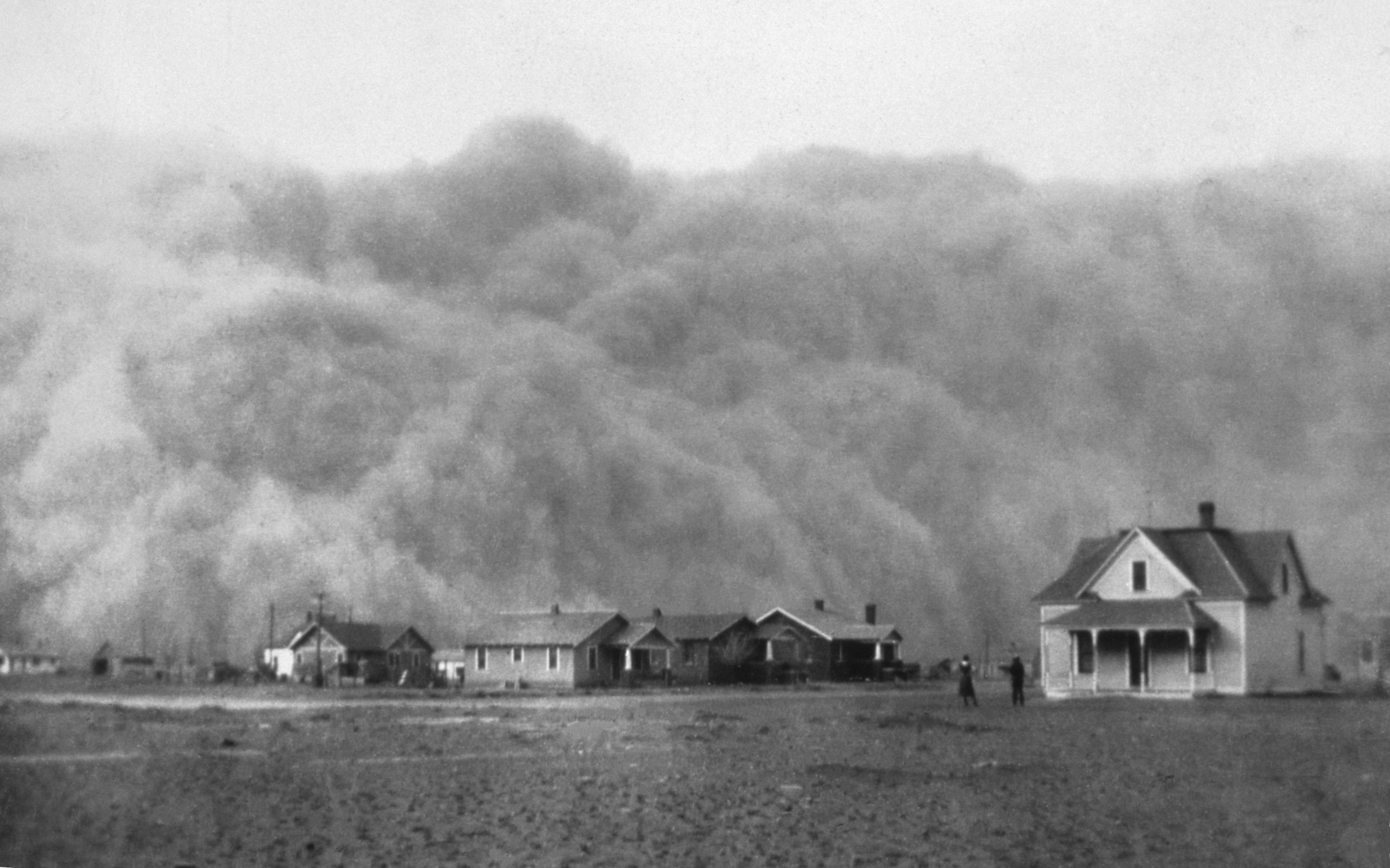
Dust Bowl Intensifies
In 1934, one of the worst environmental disasters in U.S. history took hold: The Dust Bowl.
Severe drought, combined with decades of over-farming, caused massive dust storms across the Southern Plains. Over 100 million acres of topsoil were stripped from the land. In May, a storm carried dust from Kansas to Washington, D.C., coating the Capitol dome in brown silt.
Entire communities in Oklahoma, Texas, Kansas, and Colorado were displaced. Many fled west to California—becoming known as “Okies,” regardless of their actual state of origin.
The Soil Conservation Service was created that year in response, aiming to reverse erosion through planting, terracing, and new farming methods.
This environmental crisis deepened rural poverty and further justified the federal government's expanded role.
Tensions and Backlash
1934 was also a year of growing tension. The business community, previously cautious, now became more vocal in its opposition to Roosevelt. Many accused him of undermining capitalism, expanding government too far, and threatening property rights.
At the same time, left-wing voices were growing impatient with the New Deal's limits. Huey Long, Upton Sinclair, and Father Charles Coughlin all gained national followings demanding bolder redistribution of wealth.
Labor unrest increased:
Strikes erupted in the textile, dock, and auto industries.
The Minneapolis Teamsters Strike turned violent, drawing national attention.
The West Coast Longshore Strike led to bloody confrontations and mass arrests.
Roosevelt, navigating between capital and labor, took cautious steps toward labor protections—but major labor reform wouldn’t arrive until 1935.
Racial and Social Inequities Remain
Despite New Deal expansion, many programs in 1934 excluded or marginalized Black Americans, Latinos, and immigrants—either by law or in practice.
Southern segregationists ensured that relief programs paid Black workers less or denied them jobs entirely.
Mexican-Americans were deported or pressured to “self-deport” during relief roll purges.
Native Americans, however, saw progress with the passage of the Indian Reorganization Act, which ended forced assimilation policies and restored tribal governance.
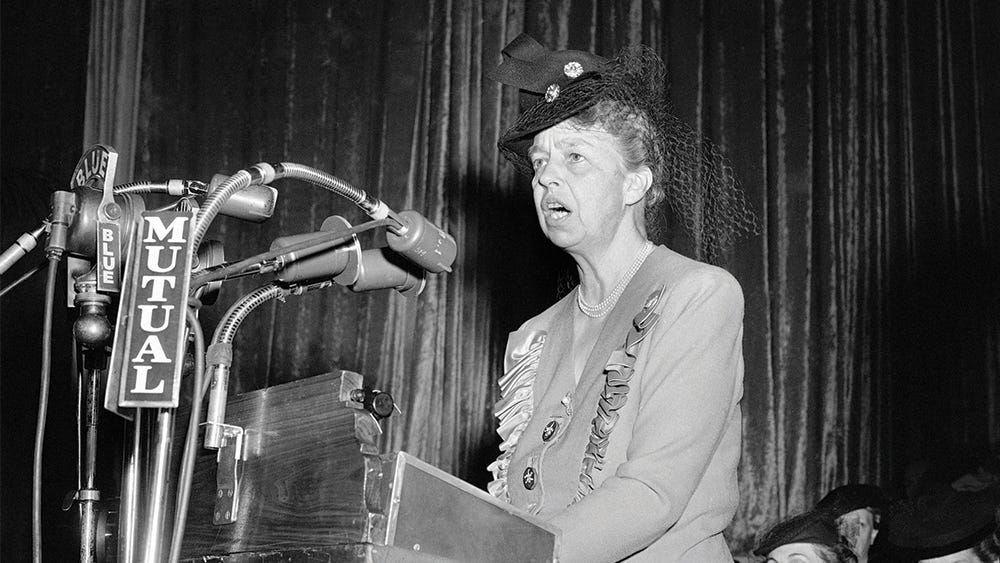
Women, too, remained largely excluded from New Deal employment programs. Most CCC and PWA jobs went to men. First Lady Eleanor Roosevelt began advocating more publicly for gender equity and civil rights in 1934, but institutional change remained slow.
Wall Street Reform and Recovery
The creation of the SEC, chaired by Joseph P. Kennedy, helped impose transparency and stability on American financial markets. The SEC began registering securities, requiring accurate disclosures, and regulating brokers.
Simultaneously, the stock market showed signs of life. After bottoming in 1932, the Dow Jones rose over 100% by the end of 1934, though it was still far below its 1929 highs.
Banking, too, had stabilized thanks to the Glass-Steagall Act and the FDIC. Confidence, if not prosperity, had returned.
Political Consolidation
The 1934 midterm elections were a surprise victory for Roosevelt and the Democrats. Traditionally, the president’s party loses seats in midterms, but the New Deal’s popularity reversed that trend:
Democrats gained nine Senate seats and nine House seats, strengthening their control.
The results were seen as a referendum in favor of Roosevelt’s interventionist approach.
For the first time, a new political coalition was taking shape—uniting urban workers, immigrants, African Americans (many switching from the Republican Party), and progressives. This coalition would define American politics for decades.
Cultural Reflection
Artists and writers, many supported by federal programs like the Public Works of Art Project, began producing works reflecting both the trauma and endurance of the Depression.
Photographers like Walker Evans and Dorothea Lange documented farm families and city life.
Writers like Langston Hughes, John Steinbeck, and Zora Neale Hurston published works that spoke to economic and racial realities.
Hollywood, fueled by New Deal-era escapism, produced blockbusters like It Happened One Night, while gangster films continued reflecting economic anxiety.
In churches, schools, and theaters, the idea that government could be a force for good was becoming culturally normalized.
Conclusion: 1934 – From Survival to Structure
1934 was not a year of miracle recovery—but it was a year of institutional confidence. The worst of the panic was behind. New Deal programs were stabilizing lives. People still suffered—but they no longer felt alone.
As Dr. Markov puts it:
“By 1934, Americans no longer feared the bottom falling out. Now they were asking—how do we climb?”
The next phase of the New Deal would tackle deeper reforms—labor rights, social security, and long-term recovery. But 1934 laid the administrative and cultural groundwork that made such ambitions possible.
It was the year the United States moved from reaction to reconstruction, and from despair to designing a new future.