
The year 1939 marked a critical historical transition. In the United States, the effects of the Great Depression were beginning to ease, not solely due to domestic recovery efforts, but increasingly because of global shifts—particularly the rise in industrial mobilization as Europe teetered into war. While the New Deal had reshaped American institutions throughout the 1930s, its limits had become apparent by the end of the decade. 1939 did not bring prosperity, but it did mark a turning point: the last year of the Depression for many Americans and the first year of World War II.
I. Economic Recovery Gains Traction
By early 1939, the U.S. economy was no longer in freefall. Unemployment, while still high at around 17%, had decreased from its 1938 peak, and industrial production began to climb once again. Government spending, though no longer as ambitious as during the early New Deal, remained steady.
The budget deficit increased slightly as the federal government continued to support public works and relief programs. Additionally, wartime production in Europe—particularly the rearmament of Britain and France—began generating spillover demand for American steel, oil, and manufacturing.
One understated but vital piece of legislation passed that year was the creation of the Federal Security Agency, which consolidated many New Deal social welfare efforts and laid the groundwork for what would later become the Department of Health and Human Services.
“1939 didn’t offer a clean break from the Depression, but it was the first year Americans could sense the tide was turning,” said Henry Waldron, economist and historian at Defined Benefits. “Recovery no longer felt theoretical—it was beginning to show in factory payrolls, steel output, and consumer sentiment.”
II. The New Deal Loses Steam
Politically, 1939 saw the slow unwinding of the New Deal as Roosevelt shifted his focus to international affairs. With the 1938 midterm elections giving conservatives more power in Congress, Roosevelt faced increased resistance to further domestic reforms. The ambitious phase of the New Deal was largely over.
Still, several programs persisted and became permanent fixtures of American life. The Social Security Act, Wagner Act, and Fair Labor Standards Act had institutionalized a new relationship between citizens and the federal government.
Yet calls for fiscal responsibility grew louder, particularly from Republicans and conservative Democrats who saw the federal debt rising. Roosevelt, once a figure of radical transformation, now governed with greater caution—especially as global events commanded increasing attention.
III. Foreign Tensions Dominate Headlines
1939 is best remembered not for its domestic economic policy, but for the start of World War II. On September 1, 1939, Nazi Germany invaded Poland, prompting Britain and France to declare war two days later. The global conflict that had loomed for years was now fully underway.
Although the United States remained officially neutral, it was clear that neutrality was becoming harder to maintain. Roosevelt, while constrained by public opinion and isolationist sentiment, began preparing for the possibility of involvement. In November 1939, the U.S. amended the Neutrality Acts to allow “cash-and-carry” sales of military goods to Allied nations.
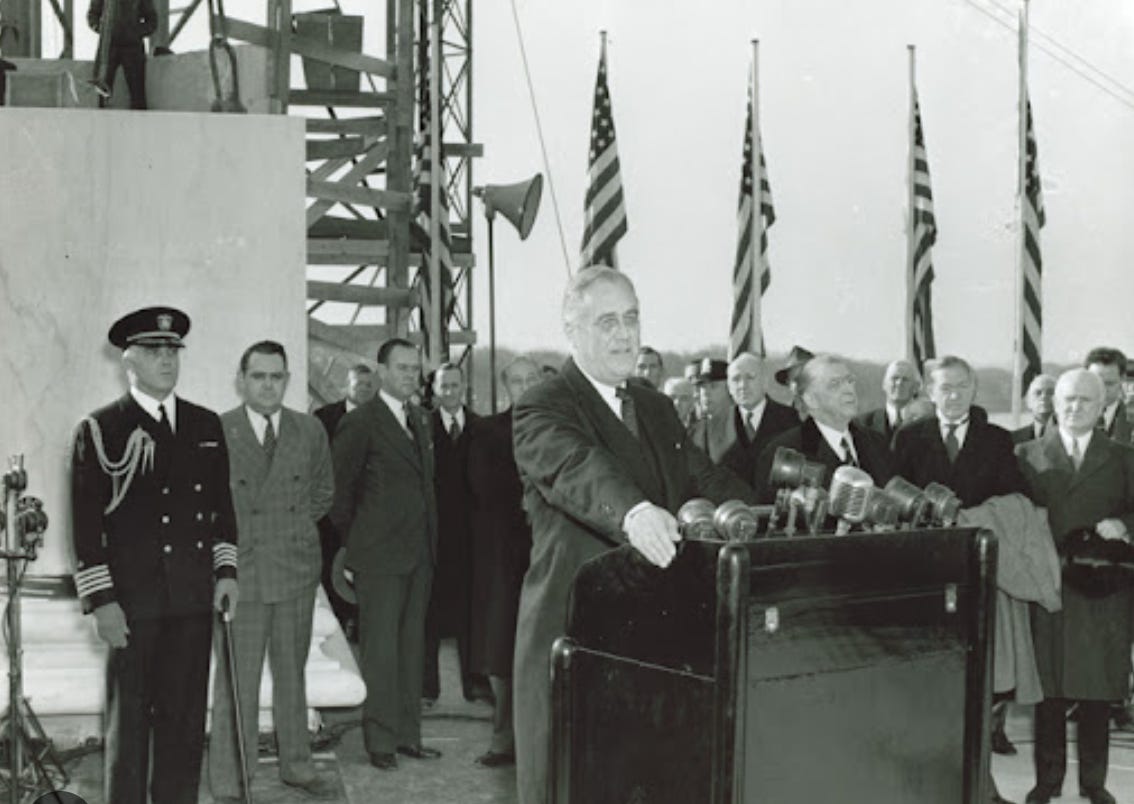
Military production ramped up slightly, and American manufacturers began benefiting from international demand. This marked the beginning of the wartime economy, which would eventually bring an end to the Great Depression once the U.S. fully mobilized in 1941.
“Global war, not domestic policy, was what ultimately pulled the U.S. out of the Depression,” noted Dr. Waldron. “It’s a paradox of history: tanks, planes, and munitions did what alphabet agencies couldn’t fully accomplish.”
IV. Labor and Industry: On the Edge of Mobilization
The labor market was still fragile in 1939, with millions unemployed and wages modest, but union activity remained robust. The Congress of Industrial Organizations (CIO) and American Federation of Labor (AFL) continued to expand their reach, though tensions between the two groups persisted.
The automobile, steel, and textile industries all saw renewed hiring as European nations placed orders for American goods. This incremental increase in demand helped stabilize many factory towns that had been devastated earlier in the decade.
The National Defense Advisory Commission, quietly formed in late 1939, would soon play a key role in coordinating military procurement. Although the U.S. was not yet at war, the industrial gears were beginning to turn in anticipation.
V. Culture and Society in 1939
Despite global anxieties, 1939 is often remembered as a golden year for American culture—particularly in cinema. The public, still reeling from a decade of economic struggle, turned to film for escape, and Hollywood delivered with unprecedented brilliance.
Films of 1939:
Gone with the Wind, a romantic epic of the South, premiered to huge audiences and won Best Picture.
The Wizard of Oz debuted, offering a blend of fantasy and musical magic that became an enduring American classic.
Mr. Smith Goes to Washington, starring James Stewart, tackled political corruption and civic virtue—timely themes amid growing public concern over democratic institutions.
In literature, John Steinbeck received the Pulitzer Prize for The Grapes of Wrath, published in 1939. The novel chronicled the plight of Dust Bowl migrants and became a definitive work on Depression-era injustice and resilience.
Music also reflected the era’s complexity—swing still dominated the airwaves, but the political edge of folk music was growing. Artists like Woody Guthrie began shaping a more politically conscious cultural soundtrack.
VI. Civil Rights and Social Inequality
While 1939 did not see dramatic advances in civil rights, foundational shifts were underway. The New Deal had brought more African Americans into political engagement, and organizations like the NAACP increased their efforts to combat segregation and lynching.
In that year, Marian Anderson, an acclaimed Black contralto, was denied the opportunity to sing at Constitution Hall by the Daughters of the American Revolution. The resulting public outcry led to her performing at the Lincoln Memorial with the support of Eleanor Roosevelt and the federal government—a landmark moment for civil rights visibility.
Immigration policy remained heavily restricted. As Jewish refugees fled Europe, the U.S. maintained strict quotas. The refusal to admit the MS St. Louis—a ship carrying over 900 Jewish refugees turned away by the U.S. in 1939—highlighted the nation's deep-seated resistance to accepting those fleeing persecution.
VII. Looking Ahead: A Nation in Waiting
As 1939 drew to a close, the U.S. stood at a crossroads. The economy was stabilizing, though not fully healed. Politically, Roosevelt faced a nation wary of foreign wars and fatigued by years of economic struggle. And yet, Americans also sensed that the global tide would soon demand a greater role from the United States.
Roosevelt’s 1940 re-election campaign would hinge on navigating these contradictions—offering both economic continuity and international leadership without direct military engagement. But by then, the gears of the U.S. war economy would be turning far faster, finally pulling the country out of the Depression through a transformation that was military, industrial, and moral.
1939 was not the final chapter of the Great Depression, but it marked the year that recovery became irreversible. While the New Deal laid the foundation for economic security, it was the world's descent into war that truly ended the era of American economic despair.
More importantly, 1939 began a new chapter in which the U.S. would move from internal rebuilding to global responsibility. As Americans watched Europe burn, their own economy stirred back to life—powered by demand, preparation, and the resolve forged in the crucible of the 1930s.