
The year 1940 marked the closing chapter of the Great Depression in the United States. While millions of Americans still faced economic hardship, a major shift was underway—driven not by domestic policy alone, but by the urgent demands of a world at war. As Europe plunged deeper into conflict, the U.S. economy shifted from recovery to rearmament, laying the foundation for a wartime boom that would finally vanquish the economic devastation of the 1930s. 1940 was a year of decisive transition: the last year of peacetime uncertainty, and the first year of America's industrial and ideological mobilization for global leadership.
I. The Depression Ends—But Not for Everyone
By most economic metrics, the Great Depression was coming to an end in 1940. Unemployment had fallen to about 14.6%, the lowest rate since the crash of 1929. Industrial production surged by more than 20% from the previous year, largely fueled by foreign arms purchases and the buildup of U.S. defense infrastructure.
Government spending increased significantly, though it remained focused more on military preparedness than social programs. The Works Progress Administration (WPA) and Civilian Conservation Corps (CCC) still operated, but their scale was diminishing as private sector jobs began to return—especially in steel, shipbuilding, aviation, and manufacturing.
“The defining feature of 1940 was acceleration,” explained Dr. Henry Waldron, economist and historian at Defined Benefits. “The Depression wasn’t just ending—it was being outpaced by the demands of defense contracts, foreign orders, and a looming national rearmament.”
That said, many rural areas and marginalized communities—particularly Black Americans and immigrants—remained economically disadvantaged. Relief programs continued to serve as vital lifelines even as headline indicators improved.
II. Defense and Economic Mobilization
In response to escalating war in Europe, President Franklin D. Roosevelt began a dramatic expansion of American military readiness. In May, Congress approved a $1.3 billion defense budget. By September, Roosevelt signed the Selective Training and Service Act, the first peacetime military draft in U.S. history.
Simultaneously, the Arsenal of Democracy speech delivered in December 1940 made Roosevelt’s position clear: the U.S. would not enter the war unless attacked, but it would provide critical support to nations resisting Axis aggression—particularly Britain.
The U.S. government began issuing large contracts to defense firms, including General Motors, Boeing, and Ford, shifting factories toward aircraft, tanks, ships, and munitions. Defense industries became the new economic engine, reducing joblessness and lifting local economies—especially in the Midwest and along the coasts.
“The Great Depression ended not with a single program or law, but with the war economy,” said Dr. Waldron. “When the U.S. positioned itself as the arsenal of democracy, it also rebuilt its economic foundation.”
III. Politics and the Third Term
The presidential election of 1940 was historic. Franklin D. Roosevelt, already serving two terms, broke precedent by running for a third—a move that ignited fierce debate.
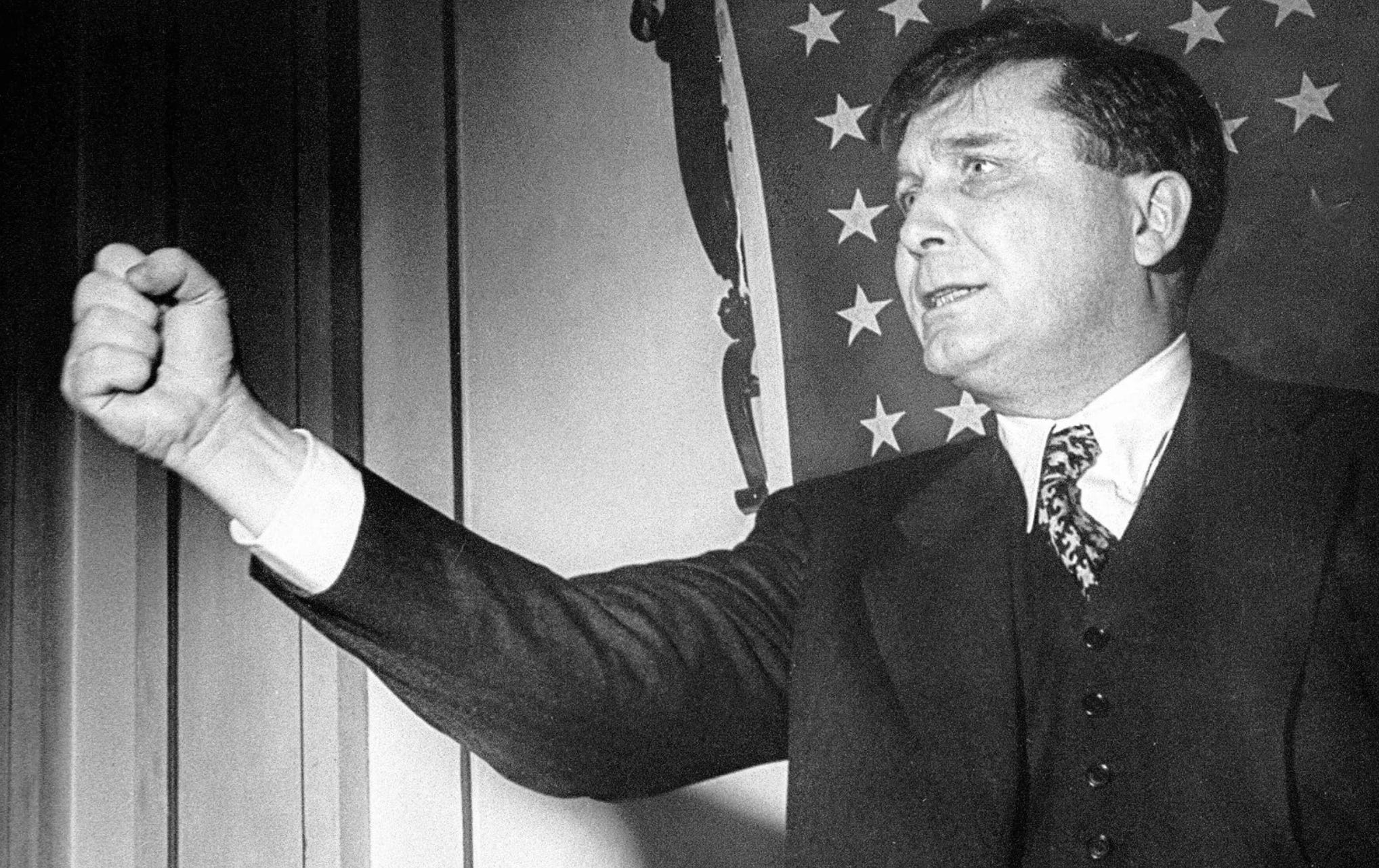
Republican nominee Wendell Willkie, a former utilities executive, campaigned on a platform of economic freedom and opposition to excessive government control. While Roosevelt's New Deal had lost some luster, the rising fear of war convinced many Americans that continuity in leadership was preferable.
Roosevelt won with 54.7% of the popular vote and 449 electoral votes. The victory was less overwhelming than in 1936 but still solid, giving him a renewed mandate to prepare the nation for war while maintaining a cautious peacetime footing.
IV. Global Conflict Shapes American Industry
Overseas, the world burned. Germany's blitzkrieg had overrun Poland, Denmark, Norway, Belgium, the Netherlands, and France. Britain stood alone against Nazi forces. Italy had entered the war on the side of Germany, and Japan continued its brutal campaign in China.
The U.S. remained officially neutral, but policy shifted dramatically with the Destroyers-for-Bases Deal of September 1940. In exchange for 50 aging American destroyers, Britain granted the U.S. rights to military bases in strategic Atlantic locations—a sign of growing American involvement.
This arrangement further stimulated shipbuilding and defense manufacturing in the U.S., contributing to job creation, regional investment, and the reconfiguration of national priorities.
V. Labor, Migration, and the Homefront
The massive defense buildup triggered internal migration. Americans moved toward coastal cities, industrial centers, and military hubs—especially in California, Michigan, and the South. The beginnings of the Sun Belt shift emerged, as states like Texas and Florida expanded their military infrastructure.
Labor unions remained active, though wartime patriotism began to temper aggressive strikes. The Congress of Industrial Organizations (CIO) pledged to avoid major work stoppages in defense-related industries.
Meanwhile, women began entering the workforce in greater numbers, particularly in manufacturing and clerical roles, setting the stage for the cultural and economic shifts of the 1940s.
VI. Civil Rights and Inequality in Wartime America
Racial injustice persisted. African Americans were disproportionately unemployed and excluded from many defense jobs, especially in the South. In response, civil rights leaders like A. Philip Randolph began organizing efforts to challenge employment discrimination, laying the groundwork for Roosevelt’s Executive Order 8802 in 1941.
Anti-immigrant sentiment remained strong, especially toward Jewish refugees and those from Axis-aligned countries. Though the U.S. accepted some Jewish refugees, restrictive immigration quotas kept many from reaching safety—even as Nazi persecution intensified.
Internally, ethnic minorities faced growing scrutiny under the guise of national security—a trend that would reach full force with Japanese internment after Pearl Harbor.
VII. Arts, Media, and Morale
Even amid uncertainty, 1940 was a cultural milestone. Film, radio, and literature helped shape public consciousness and national identity.
Notable films:
The Great Dictator by Charlie Chaplin, a satirical takedown of Hitler and fascism, premiered to critical acclaim and controversy.
Rebecca, directed by Alfred Hitchcock, won Best Picture.
Fantasia, Walt Disney’s animated experiment with classical music, broke visual and audio ground.
Literature:
Ernest Hemingway published For Whom the Bell Tolls, echoing the tragedy of the Spanish Civil War and the broader ideological battles of the time.
Radio: Edward R. Murrow’s broadcasts from London gave Americans real-time exposure to Nazi air raids, narrowing the emotional distance between America and Europe.
VIII. Preparing for What’s Next
By the end of 1940, it was clear that the U.S. could no longer remain untouched by global events. Though still not at war, the nation had dramatically shifted gears: militarily, economically, and psychologically.
Roosevelt’s administration expanded defense contracts, built new alliances, and began setting up rationing, civil defense, and intelligence frameworks. The Depression-era image of a stagnant, fearful America was giving way to one of motion, preparation, and purpose.
Conclusion
1940 was the hinge between two American eras. It marked the final unraveling of the Great Depression and the beginning of a new national narrative—one of readiness, global engagement, and industrial strength. The hardships of the previous decade had forged institutions and resilience that now found new application in an entirely different context: global conflict.
While challenges remained, the mood had shifted. Americans no longer just sought survival. They were preparing to lead.
Meta Description (150 characters):
1940 ended the Depression as U.S. rearmament surged, defense jobs rose, and Roosevelt prepared the nation for war without yet entering the conflict.